The post Eye Disease Should be on the Radar of Every Woman appeared first on Mark Latina.
]]> We often hear the terms “men’s health” and “women’s health.” This is because there are particular issues that affect each, respectively. Usually, when we consider the unique health challenges that each gender may face, the mind goes to the organic systems in the male or female body. When it comes to issues related to eye health, we may instinctively clump all people together regarding risks. Research is indicating we shouldn’t.
There are several eye conditions and diseases to which women are more vulnerable than their male counterparts. These include:
- Refractive errors such as nearsightedness and farsightedness.
- Cataracts.
- Glaucoma.
- Dry eye syndrome.
- Age-related macular degeneration.
- Vision impairment.
- Blindness.
Why the increased risk?
There are several theories regarding women and eye disease prevalence. One reason that women may develop conditions that “men don’t” is because they live longer. Because some eye diseases are age-related, this would make a lot of sense. Another factor in the development of eye disease is inflammation, a systemic condition that is often related to autoimmune conditions (also for which women are more susceptible). Lastly, the moisture of the eye can change along with hormones as a woman ages, creating an increased risk for dry eye syndrome.
Awareness is the First Step
Knowing that there are risks for eye disease, a woman can take the steps necessary to protect her vision as she ages. Annual eye care is a must for all people, and even more crucial for women who have a known risk for any eye disease. Comprehensive eye exams extend beyond the standard vision test. These exams, performed on dilated eyes, observe structures within the eye in which disease may occur.
Other steps that women may take . . .
- Avoid tobacco use, especially smoking, due to the adverse effects of toxic chemicals in cigarette smoke.
- Learn about the family history of eye disease and other conditions that could lead to diseases of the eye, such as diabetes.
- Consume antioxidant-rich foods that nourish the eyes, or take supplements that support eye health.
- Employ safe contact-lens practices, such as washing hands before handling contacts or touching the eyes.
- Maintain excellent hygiene related to cosmetics and face-washing.
We’ve got offices in Reading and Melrose and would be happy to schedule a visit with you at the office nearest you. Contact us for friendly service.
The post Eye Disease Should be on the Radar of Every Woman appeared first on Mark Latina.
]]>The post Do You Have “Floaters”? appeared first on Mark Latina.
]]>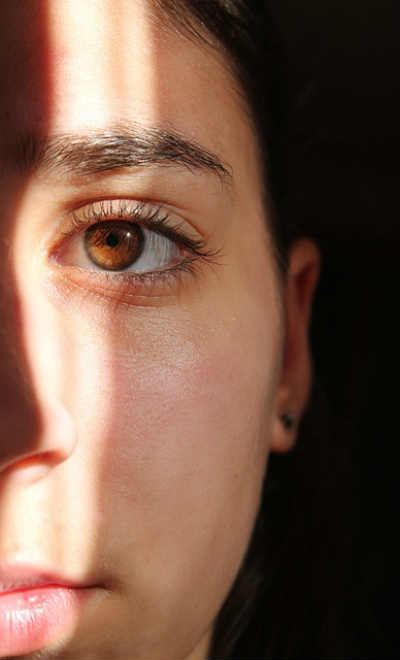 You’re not alone if you see squiggly, flickery, little black spots in your eyes that seem to disappear when you try to look directly at them. Although they seem strange and may even be alarming, the truth is seven out of ten people experience some version of eye floaters during their lives.
There are different types of floaters, but all occur in the vitreous gel, the clear substance that fills your eyes, helping your eyeballs maintain their shape and allowing light to pass through your retinas. When you are born and throughout your youth, the vitreous has a gel-like consistency. But as you age, the vitreous becomes stringy, begins to shrink, and particles form in the gel. These particles block the light passing through your eyes and cast shadows on your retina, which you see as floaters.
Possible causes of floaters may be:
- Bursting blood vessels in your retina – These floaters usually look little black dots, which can resemble smoke or a cloud of gnats. They can last for months, but usually resolve themselves as your body reabsorbs the blood.
- The formation of protein clumps -These floaters usually look like cobwebs, squiggles or tadpoles. They remain in the vitreous gel permanently, and can be ignored.
- Posterior vitreous detachment (PVD) – When the vitreous gel pulls away from your retina, floaters resemble cobwebs, a mist or a veil that obscures a portion of your field of vision. These floaters usually become less noticeable after a few months. Lightening streaks or light flashes accompanied by floaters can also be PVD. These flashes may appear off and on for weeks or months, but usually eventually
Floaters and flashes could signal a health problem if you experience a rapid onset of them. Their sudden appearance could mean that the vitreous is pulling away from your retina or that your retina is becoming dislodged from the back of your eye. When the retina is torn, vitreous can invade the opening and push out the retina, leading to a retinal detachment.
If you have questions, would like to know more or are concerned about floaters, call to schedule a consultation appointment, today: In Reading (781) 942-9876; In Melrose (781) 662-2216.
The post Do You Have “Floaters”? appeared first on Mark Latina.
]]>